
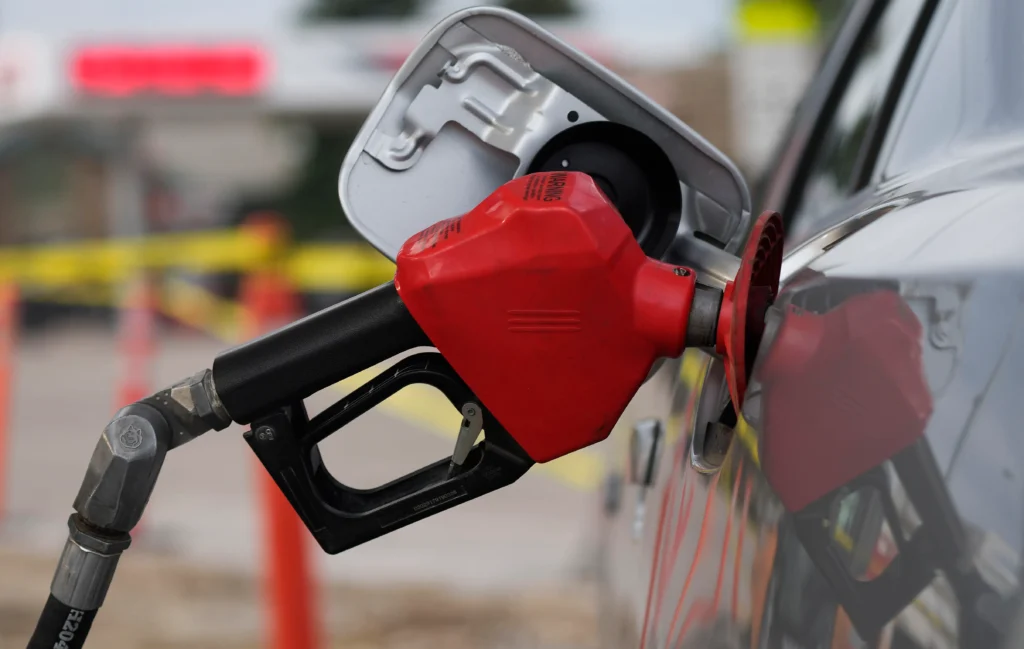
Introduction to U.S. Gas Prices $4 Per Gallon
For the first time in more than three years, the average U.S. Gas Prices Smash $4 Per Gallon, a psychologically important milestone as the Iran war chokes global oil supply and creates fresh instability across energy markets. According to the American Automobile Association (AAA), the national average reached $4.018 per gallon on March 31, 2026, the highest level recorded since August 2022, when Russia’s invasion of Ukraine disrupted global fuel supplies. Just one day earlier, prices stood at $3.990, while a month ago American drivers were paying close to $3 per gallon.
This dramatic rise represents an increase of more than $1 per gallon in a single month, highlighting the speed at which fuel costs are climbing. Energy analyst Patrick De Haan of GasBuddy warned that motorists should expect prices to rise further at the pump, noting that similar spikes occurred during the Russia-Ukraine energy shock, when gasoline prices surged above $5 per gallon in June 2022. With tensions escalating again in the Middle East and supply routes under pressure, experts say U.S. gas prices smashing $4 per gallon as Iran war chokes global oil supply could signal more increases ahead for American consumers.
What Triggered the Fuel Crisis?
For the first time in more than three years, U.S. Gas Prices Smash $4 Per Gallon, and the main reason behind this surge is geopolitical tension in the Middle East. On February 28, 2026, coordinated U.S.-Israeli attacks on Iran triggered a strong Iran response, disrupting key shipping routes in the Persian Gulf oil corridor.
Soon after the strikes, global crude markets reacted sharply. Energy analysts confirmed that tanker movement slowed across the Strait of Hormuz, one of the most critical oil transit routes in the world. As supply tightened, U.S. gas prices hit $4 per gallon, marking the highest gas prices since 2022 and signaling a major shift in the global energy outlook.
Why the Strait of Hormuz Matters So Much
The closure of the Strait of Hormuz created what economists describe as a classic oil supply shock Middle East war scenario. Nearly 20% of the world’s petroleum supply moves through this narrow passage every day. When shipping slowed dramatically, global markets reacted instantly.
As a result, oil prices surge 50% compared with expectations earlier this year. This disruption explains why U.S. gasoline hits $4 per gallon nationwide and why analysts warn that the global impact could last longer if tanker traffic does not resume quickly.
Gasoline Prices Jump Across the United States
Drivers are now feeling the pressure directly as U.S. Gas Prices Smash $4 Per Gallon nationwide. According to AAA tracking data, the gasoline price average reached gas prices $4.018 per gallon, representing one of the fastest increases in recent years.
Before the conflict began, the national average stood close to $2.92. Within weeks, the average U.S. gas price $4 per gallon became the new reality. The spike confirms that U.S. gasoline prices soar 30% Iran war conditions have reshaped energy markets almost overnight.
Diesel Prices Are Rising Even Faster
While gasoline headlines dominate attention, diesel markets are under even greater pressure. Analysts report diesel prices $5 per gallon across many regions, with forecasts suggesting continued increases if shipping remains restricted.
Because Middle Eastern crude supports diesel-heavy refining output, the Strait of Hormuz closed situation is tightening supply chains worldwide. Experts warn that diesel prices surge 40% economy impact could affect transportation, agriculture, and retail sectors for months.
Government Response to the Fuel Price Surge
After U.S. Gas Prices Smash $4 Per Gallon, Washington introduced emergency policies to stabilize the market. The EPA E15 waiver allows expanded ethanol-blended fuel sales during summer months, helping reduce short-term price pressure.
In addition, a major Strategic Petroleum Reserve release injected extra crude into domestic supply channels. Authorities also approved a temporary Jones Act waiver, allowing foreign-flagged vessels to move fuel between U.S. ports more efficiently. These combined steps represent key Trump administration fuel price actions aimed at easing supply constraints.
Despite these measures, officials acknowledged that the crisis could persist if global tensions continue.
Vice President JD Vance Warns of More Price Pressure Ahead
Vice President JD Vance gas prices comments reflected growing concern inside the administration. He warned Americans to prepare for continued volatility and described the situation as a “rough road ahead.”
Analysts now frequently reference this warning as gas prices rough road ahead Vance, highlighting uncertainty surrounding supply recovery while the Middle East war continues to influence energy markets.
How the Crisis Is Affecting the Wider Economy
When U.S. Gas Prices Smash $4 Per Gallon, the effects extend far beyond the fuel pump. Transportation companies face higher operating costs, farmers pay more for fertilizer and equipment fuel, and shipping expenses increase across retail supply chains.
Because diesel supports freight movement nationwide, the fuel supply disruption is pushing inflation pressure into groceries, construction materials, and consumer goods. The situation demonstrates how a regional conflict can quickly create global economic consequences.
Why Oil Markets React So Quickly to Conflict
Energy markets are especially sensitive to disruptions near the Persian Gulf oil corridor because the region supplies a large portion of global demand. When shipping slows or production declines, prices respond immediately.
That is why analysts say Iran war gas prices increases are not limited to the United States. Countries around the world are experiencing similar pressure as traders react to uncertainty around supply stability.
What Could Happen Next?
The future direction of fuel costs depends heavily on whether tanker traffic resumes through the Strait of Hormuz. If shipping stabilizes, analysts expect prices could gradually move below $4 a gallon later this year.
However, if tensions continue rising, U.S. Gas Prices Smash $4 Per Gallon may remain one of the defining economic headlines of 2026. Under prolonged disruption scenarios, additional increases in diesel and gasoline prices remain possible as the global impact of the conflict spreads across energy markets.
What is the current average gas price in the U.S.?
The national average hit $4.018 per gallon on March 31, 2026 the highest since August 2022.
How much have gas prices risen since the conflict began?
Prices surged over 30% since the February 28 strikes, jumping more than $1 per gallon in just one month.
Why are diesel prices rising even faster?
Middle Eastern crude is distillate-rich and feeds diesel refining disproportionately. Diesel is now approaching $5 per gallon nationally, up roughly 40%.
What is the Strait of Hormuz and why does it matter?
It’s a narrow waterway between Iran and Oman through which 20% of the world’s daily oil supply passes. Its closure instantly disrupts global fuel markets.
What is the government doing to lower fuel prices?
The Trump administration released 173 million barrels from the Strategic Petroleum Reserve, issued an EPA E15 waiver, waived the Jones Act, and lifted Russian oil sanctions.
What did JD Vance say about gas prices?
Vice President Vance warned Americans to expect “a rough road ahead” on fuel prices, acknowledging that emergency measures offer limited short-term relief.
When will gas prices come back down?
Only when the Strait of Hormuz reopens. A diplomatic resolution could pull prices toward mid-$3 before summer; prolonged conflict could push them past $5 nationally.
Conclusion
America’s $4-per-gallon moment is not a blip it’s the direct consequence of a shooting war reshaping global energy flows. Until the Strait of Hormuz reopens and tankers move freely again, every emergency measure Washington deploys buys time, not solutions. The pump price Americans see today is, ultimately, the cost of geopolitical instability playing out in real time.