
Introduction
There is a distinct weight associated with teaching in high-responsibility environments. Training sessions and classrooms are not the only places where instruction takes place. What students learn is frequently applied rapidly, perhaps under duress, and typically in circumstances where choices have tangible consequences. Teachers in these settings require training that fosters awareness, judgment, and clarity rather than just theory.
Teachers who comprehend how accountability influences learning are needed for positions like clinical instruction, professional training, and higher education. Delivering knowledge becomes just one aspect of the task. Just as important as the content being taught is how it is presented, timed, and reinforced. This type of instruction emphasizes preparedness above performance.
Pressure to Make a Decision
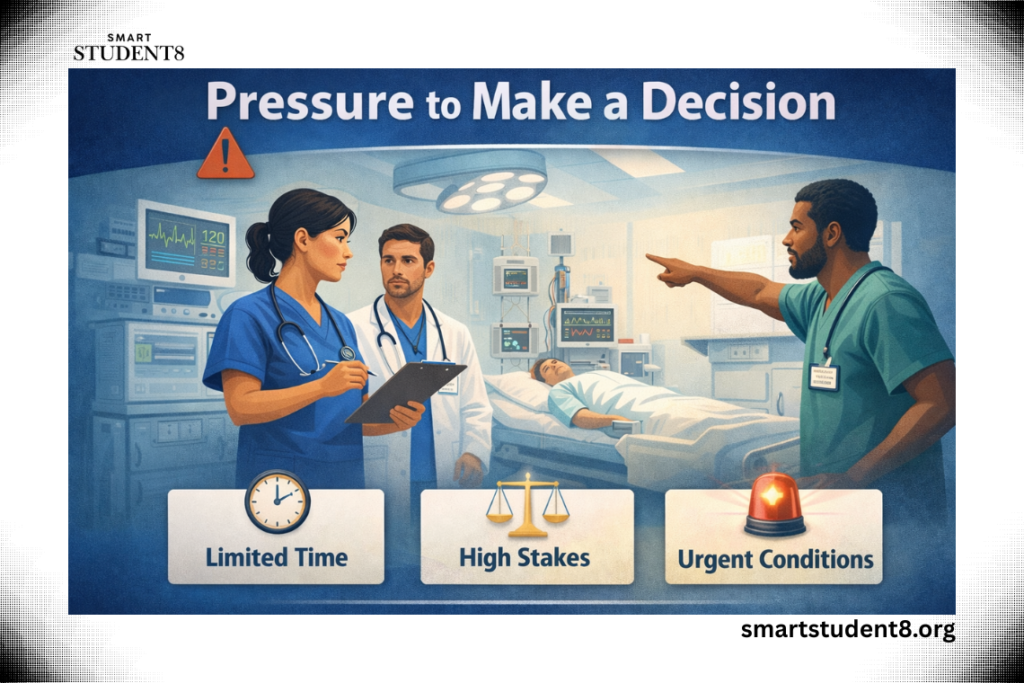
Teachers in high-stakes settings need to be aware of how learning is impacted by decision pressure. Once they are aware that their decisions have repercussions, learners process information differently. Teaching in these circumstances requires an understanding of how accountability, urgency, and a smartstudent8 margin for error affect focus and memory.
This change is frequently experienced directly by nurses who transition into positions. Pressure is recognizable from clinical experience, but teaching it takes more expertise. This shift is facilitated by an online MSN program that teaches nurses how to help people make difficult decisions. Additionally, it fosters the development of instructional planning, communication, and evaluation skills, enabling nurses to assist learners in authentic clinical situations without compromising their professional obligations. Online formats are effective because they enable working professionals to continue honing their teaching abilities while maintaining a connection to practical tasks rather than academic abstraction.
Useful Information
Teachers in high-stakes environments need to convert complicated concepts into actions that students can use right now. Theoretical information frequently breaks under duress. Teaching emphasizes how ideas work in practical situations rather than just how they are stated.
This method alters the way information is displayed. Sequence, prioritizing, and clarity are emphasized in the lessons. Students acquire knowledge that feels practical rather than abstract. Because students understand how knowledge relates to their duties rather than feeling overloaded by amount, applied teaching fosters confidence.
Cognitive and Temporal Load
In high-responsibility settings, learning is impacted by time constraints. The mental burden remains high, interruptions are frequent, and teaching periods are frequently brief. To ensure that learning continues to be effective, educators must design their lessons with these constraints in mind.
Learners’ retention is influenced by their cognitive load. Attention-limit-respecting instruction concentrates on key points and obvious conclusions. Teachers who are ready for these circumstances understand how to pace lessons without compromising their depth. Learning that endures beyond the moment is supported by awareness of mental demand.
Fixing Mistakes
Learning how to rectify mistakes without losing confidence is part of preparing in high-responsibility environments. When duty is high, mistakes frequently have emotional weight. Instead of hesitating, educators must react in ways that foster progress.
Trust is maintained by effective repair. Feedback remains straightforward, unambiguous, and improvement-oriented. Students gain from knowing what needs to be changed without becoming disheartened. Students who get instruction that carefully addresses mistakes are more engaged and inclined to improve their judgment.
Possessing authority and being approachable
Teachers in high-stakes positions need to strike a balance between authority and approachability. In order to feel comfortable expressing hesitation or asking questions, learners must have faith in the instruction. Deeper learning and open communication are supported by this equilibrium.
Teachers can cultivate presence without distance by being prepared. Experience and clarity, not rigidity, are the sources of authority. Being approachable promotes discussion and introspection. Teaching that possesses these attributes fosters classrooms where accountability is valued without restricting involvement.
Stress and Education
Stress has a subtle but significant impact on how people learn in situations involving a lot of responsibility. Although pressure can increase focus, if it is not controlled, it can also constrict attention and impair memory. Teachers must comprehend how stress manifests in students not as a sign of weakness, but as a normal reaction to accountability.
Even in hectic settings, teaching with stress in mind requires making time for processing. Teachers are trained to pace their lessons, reiterate important ideas, and identify when students require more foundation than additional knowledge. Teachers can encourage learning that endures under strain rather than deteriorating as stress levels rise by preparing for this type of instruction.
Providing an Example of Professional Accountability
Long before they discuss accountability directly, teachers in high-responsibility environments it. Students observe how teachers respond to stress, make corrections, and carry out their judgments. Formal education is frequently less effective than actions taken during difficult times. Consistency, openness, and ownership rather than just explanation make accountability apparent.
Students’ perceptions of responsibility in their own responsibilities are also influenced by examples of accountability. Teachers who set boundaries, communicate effectively, and consider their results demonstrate that accountability is a daily practice rather than a response to issues. This conduct fosters trust and establishes a benchmark that students follow, realizing that professional responsibility manifests itself in day-to-day decisions and actions.
Awareness of Systems
Teaching with high responsibility necessitates awareness that goes beyond particular duties. Rarely do decisions impact a single individual or result. The way that activities spread depends on a number of factors, including systems, protocols, and team dynamics. Teachers must assist students in seeing this wider picture without being overbearing.
The concept of responsibility is shaped by system awareness. Teaching involves explaining how choices relate to shared accountability, policies, and procedures. Teachers equipped to teach at this level help students think beyond their immediate actions and take into account the bigger picture.
Real-Time Adaptation
Rarely does teaching in high-stakes situations follow a set plan. Priorities fluctuate suddenly, circumstances change rapidly, and questions come up out of the blue. Teachers must modify their lessons in real time while maintaining the learning objectives.
Flexibility is facilitated by preparation. prepared for these settings learn how to modify explanations, go over ideas again, or shift their emphasis without losing their meaning. Adaptability keeps lessons relevant and linked to the issues that students are currently encountering. Teaching remains flexible rather than inflexible.
Moral Evaluation
Learning how to instruct ethical judgment in addition to technical skills is another aspect of preparation. Decisions in high-responsibility positions frequently go beyond protocol. Teachers must help students navigate the ethical issues that influence their choices in practical settings.
It takes dialogue, introspection, and precise framing to ethical judgment. Teachers assist students in comprehending the relationship between professional standards, values, and accountability. This planning encourages deliberate action as opposed to a reflexive reaction. Instead than existing as a distinct idea, ethical awareness becomes a component of practice.
It takes more than just subject-matter competence to prepare professionals to in high-responsibility environments. must be conscious of pressure, stress, the influence on the system, and their ethical obligations. Teaching needs to be realistic, flexible, and based on situations where choices have consequences. Teachers may confidently assist students when they are prepared with judgment, clarity, and human awareness in mind. Instead of imparting knowledge,teaching turns into a process of fostering preparedness.
conclusion
Sharing information is only one aspect of teaching in high-responsibility environments. It necessitates knowledge of systems, pressure, stress, and moral obligations. Teachers must be transparent, flexible, encouraging, and human-centered in order to prepare students for real-world application. This kind of instruction helps students manage their obligations with competence and awareness by fostering preparedness, confidence, and accountability.
FAQs
What distinguishes instruction in high-stakes environments?
Because students apply knowledge rapidly under pressure, educators require abilities beyond subject-matter competence, such as stress management and decision-making guidance.
How can teachers properly deal with students’ errors?
Give students constructive criticism that emphasizes growth rather than assigning blame so they can grow from mistakes without losing hope.
What is the significance of system awareness?
Individuals are not the only ones impacted by decisions. Acting responsibly in larger contexts is facilitated by learners’ comprehension of team dynamics, procedures, and policies.
How can teachers impart moral judgment?
By fostering dialogue, introspection, and illustrations that connect professional standards, principles, and accountability to practical choices.
Can professionals make the shift to teaching with the aid of online programs?
In agreement. Working professionals can acquire teaching abilities while maintaining a connection to their actual responsibilities through online programs such as MSN courses.