
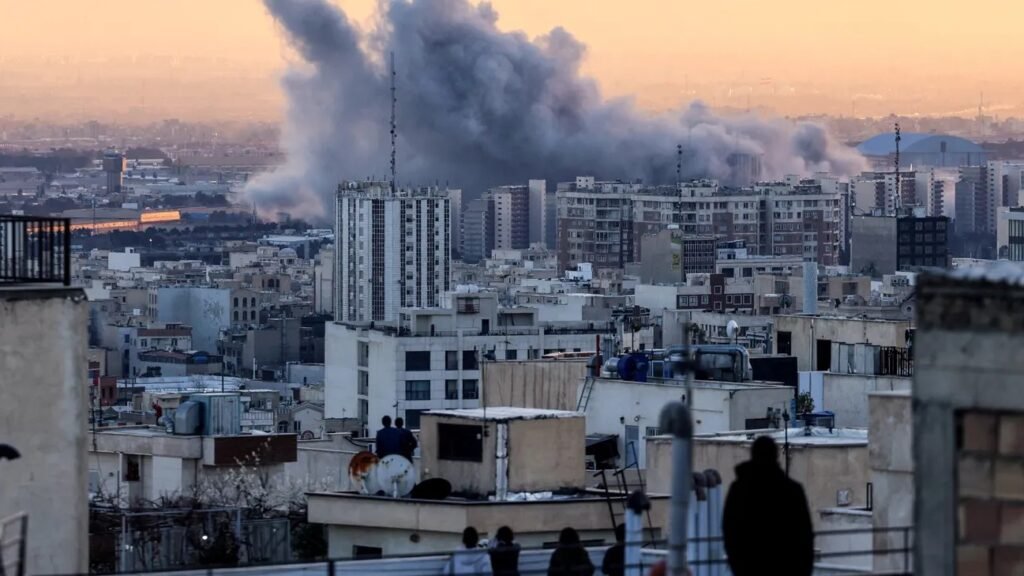
As of March 15, 2026, the Middle East remains gripped by an intense and rapidly evolving conflict known as the US-Israel war on Iran OR (Israel Iran War 2026). What began as coordinated airstrikes on February 28 has stretched into its 16th day, with missiles, drones, and explosions shaking cities from Tehran to Tel Aviv and disrupting critical oil routes in the Strait of Hormuz. This escalation has already claimed thousands of lives, spiked global energy prices above $100 per barrel, and raised fears of a broader regional or even worldwide confrontation.
The war stems from long-standing tensions over Iran’s nuclear ambitions, missile programs, and proxy activities, but the immediate trigger was a joint US-Israeli decision to neutralize perceived imminent threats. Heavy strikes have targeted Iranian military sites, leadership, and infrastructure, while Iran has responded with relentless retaliatory barrages. Below is a detailed look at the key developments, drawing on verified reports from the front lines.
Why Did the US and Israel Attack Iran?
On February 28, 2026, the United States and Israel launched nearly 900 strikes in the opening 12 hours under operations dubbed Epic Fury (US) and Roaring Lion (Israel). The primary objectives included destroying Iran’s nuclear facilities, missile stockpiles, air defenses, and senior leadership to prevent Tehran from acquiring a nuclear weapon and to eliminate what officials called an “existential threat.”
US President Donald Trump stated the strikes were necessary after diplomacy failed and Iran attempted to rebuild its nuclear program following earlier 2025 actions. Israeli Prime Minister Benjamin Netanyahu emphasized removing the regime’s capacity to produce long-range missiles that could overwhelm defenses. The initial wave killed Supreme Leader Ayatollah Ali Khamenei and dozens of top officials, along with collateral damage including around 170 civilians at a site near a naval base. Subsequent days saw expanded targeting of IRGC bases, factories in Isfahan, and even Kharg Island—the heart of Iran’s oil export infrastructure—though US forces spared core oil terminals to avoid worsening the global energy crisis.
Iranian officials and some analysts argue the attacks were unprovoked aggression aimed at regime change. US and Israeli leaders maintain the action was defensive and preemptive, citing Iran’s enriched uranium stockpile (enough for multiple weapons if further processed) and its support for groups like Hezbollah.
Iran’s Retaliatory Attacks and the Reality of Strikes on Oil Tankers
Iran wasted no time in striking back. Within hours of the initial assault, hundreds of missiles and thousands of drones targeted Israel, US bases in the Gulf, and allied nations. Iranian forces have also closed or severely disrupted shipping in the Strait of Hormuz, attacking commercial vessels and energy infrastructure.
Did Iran bomb a US oil tanker?
Reports confirm Iranian drones struck multiple foreign oil tankers in the Persian Gulf and Iraqi waters, including at least one American-linked vessel near Sharjah that caught fire. Crew rescues and damage assessments followed, with at least one fatality reported in related incidents. These attacks form part of Tehran’s strategy to pressure Gulf states and disrupt global oil flows, though US and Israeli forces have countered by bombing Iranian naval assets and missile sites on Kharg Island.
Explosions continue across Iran, with fresh US-Israeli barrages hitting Isfahan (killing at least 15), Tehran’s Basij checkpoints, and the country’s space research center. Iran has fired back at Israeli territory and Lebanon-linked targets, wounding civilians in Eilat and elsewhere.
US Troop Casualties and the Human Cost
The conflict has not been bloodless for American forces. How many US troops were killed in Iran? At least 13 US service members have died since February 28, primarily from Iranian missile and drone strikes on bases in Kuwait, Saudi Arabia, and an aerial refueling tanker crash in Iraq. Identified personnel include Chief Warrant Officer 3 Robert M. Marzan, Maj. Jeffrey R. O’Brien, and others. Iranian state media has claimed far higher figures, but verified Pentagon data stands at around 13 confirmed deaths with additional injuries.
Civilian tolls in Iran exceed 2,000 when including Lebanon spillover, with power outages, sleepless nights in Tehran, and damaged cultural sites adding to the hardship.
Military Power Comparison: Iran vs. Israel and the United States
Biblical Perspectives on Iran vs. Israel
Ancient Persia (modern Iran) features prominently in Scripture. The Bible references Persia in the books of Esther, Daniel, and Isaiah, where kings like Cyrus played pivotal roles in Jewish history. In end-times prophecy, Ezekiel 38–39 describes a coalition including “Persia” (Iran) allying with Magog (often linked to Russia) in an invasion of Israel that ultimately fails through divine intervention. Jeremiah 49 also prophesies judgment and restoration for Elam (part of ancient Iran). Many interpreters see current events as potentially aligning with these scenarios, though scholars caution against date-setting.
Economic and Humanitarian Fallout
The war has paralyzed oil trade, damaged Iranian export hubs, and forced global shipping reroutes. China’s heavy reliance on Iranian crude makes it particularly vulnerable, while oil prices surge and stocks slide. Humanitarian conditions worsen in Iran, Lebanon, and Gaza, with displacement and infrastructure collapse.
As the conflict enters its third week, President Trump has urged international naval escorts for the Strait of Hormuz, while Iran’s new leadership (Mojtaba Khamenei) vows continued resistance. No clear end is in sight, but the human and economic costs mount daily.
This unfolding story underscores the fragility of Middle East stability and the high stakes for global powers. Developments continue rapidly; updates will follow as verified information emerges.
FAQS
Why did the US and Israel attack Iran?
To neutralize Iran’s nuclear and missile threats, destroy military capabilities, and address regime-linked dangers after diplomacy failed.
Did Iran bomb a US oil tanker?
Iranian drones struck foreign/US-linked oil tankers in the Gulf, setting some ablaze; direct confirmation of a purely “US” tanker varies by incident.
Is China an ally with Iran?
Yes, a close strategic and economic partner providing diplomatic and limited tech support.
How many US troops were killed in Iran?
At least 13 confirmed in related regional attacks (bases in Kuwait/Saudi Arabia and incidents in Iraq); none in direct ground combat inside Iran.
Who is more powerful, Iran or the United States?
The United States, by overwhelming margins in technology, navy, airpower, and overall capabilities.
What does the Bible say about Iran vs Israel?
Iran (ancient Persia) appears in end-times prophecies (Ezekiel 38–39) as part of a coalition invading Israel, ultimately defeated by divine intervention.
Which military is stronger, Iran or Israel?
Israel holds qualitative and technological edges; Iran has numerical manpower and missile advantages.
Which country buys the most oil from Iran?
China (over 90% of exports).
Can Iran sink the US aircraft carrier? Highly unlikely with current weapons; US carriers are heavily defended and resilient.
Is Russia an ally of Iran?
Yes, providing intelligence and prior military tech but limited direct intervention in this war.
Why is Iran so important to China?
Primary source of discounted oil and key partner in Belt-and-Road infrastructure and trade.
Conclusion
As the US-Israel war on Iran enters its third week, the conflict shows no signs of abating, with relentless airstrikes devastating Iranian infrastructure, retaliatory missile barrages disrupting the Strait of Hormuz, and global oil prices soaring past $100 per barrel. Thousands of lives military and civilian have been lost, humanitarian crises deepen across the region, and economic shocks ripple worldwide. Biblical prophecies linking ancient Persia to end-times events add interpretive layers for many observers. Without urgent de-escalation or diplomacy, the risk of broader war persists, underscoring the Middle East’s volatile fragility and the urgent need for restraint amid mounting human and strategic costs.