
Introduction: Mastering the Hearthstone Ladder
If you’ve ever dreamed of hitting Legend rank or just crushing your friends in casual play, you need to realize that Hearthstone is more than just luck it’s a game of skill, strategy, and most importantly, data. To truly elevate your game and climb that competitive ladder, you have to move beyond just playing what feels good and start playing what the numbers prove is good. This mindset shift is what separates the average player from the consistent winners.
This is where leveraging the amazing, hard-working community resources comes into play! Back in the day, sites like HearthStats.net played a massive role in performance analysis, helping early players gather and share essential statistics. While that platform may have changed or faded, the need for data hasn’t! The community’s continuous efforts to gather win rates, track decks, and analyze the meta are absolutely vital for your growth.
What is Essential Data and How it Improves Your Game
Understanding Meta Snapshots: Interpreting Win Rates and Play Rates
The “meta” (or the most effective tactics available) is the heartbeat of competitive Hearthstone. To win consistently, you can’t just run an old favorite; you have to know what other players are bringing to the table. This is why Meta Snapshots are your absolute best friend! These community reports interpret mountains of data, showing you which decks have the highest win rates and which are being played most often. Learning to read these reports is like getting a cheat sheet for the entire ladder.
- Identifying Tier 1, 2, and 3 deck archetypes: Meta Snapshots categorize decks into tiers. Tier 1 decks are the absolute powerhouses the most optimized and highest win-rate strategies available. Tier 2 decks are strong, consistent counters or slightly less refined strategies. If you want to climb fast and efficiently, you should almost always be playing a deck that is proven to be Tier 1 or Tier 2.
- Analyzing class diversity and popularity trends: Beyond just the deck, look at what classes are popular. If everyone is playing Demon Hunter, then you need a deck that crushes Demon Hunter. If a class seems to be everywhere, it’s a good bet to play a deck that preys on its weaknesses. This tactical foresight, driven purely by reading the play rate trends, gives you a massive edge before you even shuffle your cards.
The Power of Deck Trackers: Leveraging Software for Real-Time In-Game Advantages
While community sites give you the big-picture meta, Deck Tracker software gives you the real-time, in-game advantage you need to win the match right in front of you. Forget the old-fashioned way of trying to remember every single card your opponent played or what you have left in your deck. Modern trackers handle all that mental bookkeeping for you, freeing up your brainpower for the tough, strategic decisions.
- Tracking your deck’s remaining cards and opponent’s played cards: These trackers create a small, legal overlay on your screen. They show you exactly which cards are left in your deck, which is priceless when calculating odds of drawing that game-winning legendary. They also meticulously record every card your opponent has played, letting you know exactly which powerful threats, clear spells, or healing cards are still left for them to use.
- Calculating win probability and matchup statistics: Some advanced trackers even calculate your live win probability based on the cards remaining in your deck and the matchup! This information is phenomenal because it tells you if you should play aggressively (“go face”) or if you need to slow down and play for “value.” It transforms difficult decisions into calculated risks.
- Key features of modern deck tracking tools: Modern trackers do so much more than just count! They often integrate with online platforms to automatically upload your games, analyze your win rates against specific opponents, and even help you manage your card collection. If you’re serious about competitive Hearthstone, these tools are a non-negotiable part of your toolkit for rapid improvement.
Personal Performance Review: Using Data to Identify and Fix Your Own Mistakes
The best players aren’t those who never lose; they’re the ones who learn the most from their losses. If you’re relying solely on feeling, you’ll likely repeat the same errors! A huge benefit of using a deck tracker is the ability to record your games and perform a Personal Performance Review. This data analysis helps you hold a mirror up to your own play so you can stop blaming bad luck and start focusing on genuine improvement.
- Analyzing individual game replays and turn-by-turn decisions: Most trackers allow you to save your game replays. Watch back a loss, specifically pausing to review crucial moments. Did you use your removal spell too early? Did you miss a lethal combination? Did you make a poor mulligan choice? Objectively reviewing your turn-by-turn plays is the fastest way to plug those skill leaks and climb the ranks.
- Tracking win rates by class, rank, and match duration: Look at your own statistics. Are you suddenly losing to all Warriors at Diamond rank? That tells you two things: you need to study the Warrior matchup, and you need to adjust your strategy when you hit that rank ceiling. Understanding your personal data not just the community’s data is what molds you into a true Hearthstone master. This targeted data is what allows you to focus your study time exactly where it’s needed most for the biggest impact.
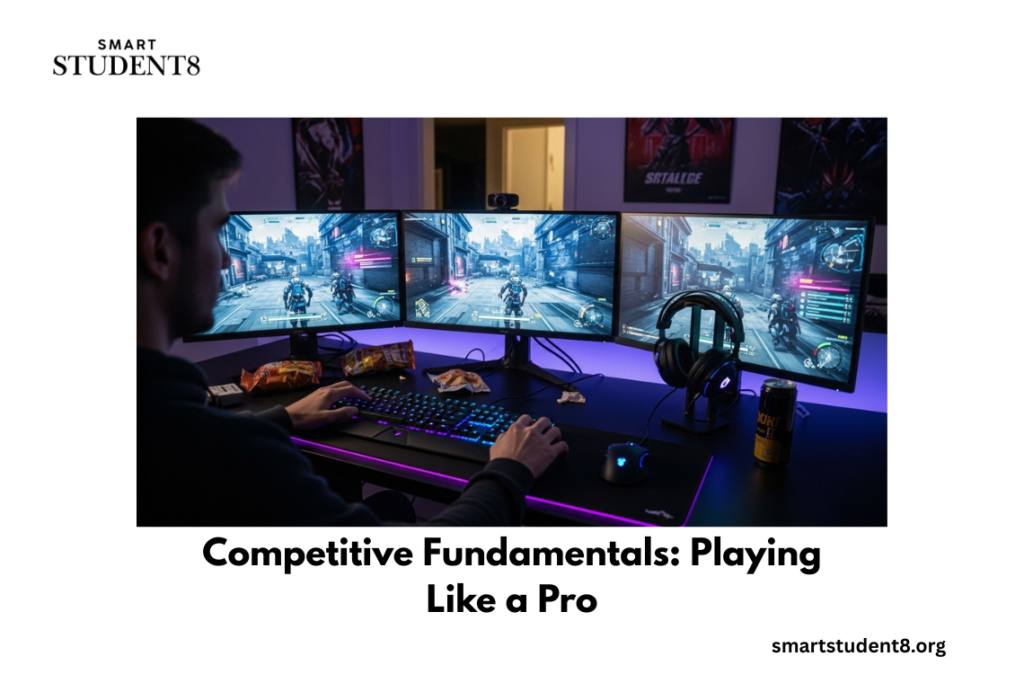
Competitive Fundamentals: Playing Like a Pro
Core Concepts of Strategy: Mastering Tempo, Value, and Card Advantage
Hearthstone’s complex strategy can be broken down into three major pillars: Tempo, Value, and Card Advantage. You need to master when to prioritize each one in different matchups. Value is one of the first concepts you learn; it means getting more out of your card than your opponent does out of theirs, like using one spell to destroy two minions, which often leads to Card Advantage . Tempo means efficiently using your mana crystals to put powerful minions on the board and control the flow of the game, forcing your opponent to react to you.
- Understanding the mana curve and its impact on the board: A good deck is built with a smooth “mana curve,” meaning you have a balanced number of cheap, mid-cost, and expensive cards. Successfully playing a card that costs the exact amount of mana you have available each turn (playing “on curve”) is critical for maintaining Tempo. Wasting mana is essentially wasting an opportunity to dominate the board and set up your future turns.
- When to trade minions and when to “go face” (direct damage to the Hero): This is the ultimate, most common decision point in the game! Trading (using your minions to destroy theirs) is usually the correct play when you are trying to win the game through control and attrition. However, going face (attacking the Hero directly) is the correct play when you are an aggressive deck trying to win before the opponent can stabilize, or when you have a clear lethal setup. Learn to recognize your win condition early!
Mulligan Mastery: Optimizing Your Starting Hand for the Current Matchup
The Mulligan the initial decision of which cards to keep and which to replace is arguably the most important strategic point of any game, yet so many players rush through it! The cards you start with directly influence your ability to execute your early-game strategy and secure board control. Mastering this phase can easily increase your win rate by several percentage points, which makes a huge difference over many games.
- Identifying “Keep” cards versus “Throw Back” cards: Generally, you want to keep strong early-game minions (cost 1, 2, or 3 mana) that help you establish tempo. However, highly situational or very expensive cards (like an 8-mana Legendary) should almost always be thrown back unless they are part of a crucial early combo. Don’t be greedy; aim for consistency and a strong opening curve.
- Adjusting your mulligan based on the opponent’s class archetype: A truly great player doesn’t have a single fixed mulligan strategy. If you are playing against a Warlock, you should be ready for a fast, aggressive Zoo deck, or a slow, grinding Control deck. If you can tell by their starting play style which archetype they are, you need to adjust your plan instantly keeping your powerful answers for Control and your fast minions for Aggro. For example, keeping a big healing card against an aggressive Hunter used to be vital, even if it was a high-cost card.
Advanced Decision Making: Playing Around Opponent’s Potential “Swing” Cards
As you move up the ladder, your opponents stop making obvious mistakes, forcing you to step up your decision-making. Playing around their potential “swing” cards the powerful spells or minions that can completely reverse the state of the board is a mark of an advanced player. This skill comes from experience and from using your deck tracker to know what their class can do, even if they haven’t shown the card yet.
- Tracking opponent’s card usage to predict clear and threat potential: Did they use one of their two copies of Flamestrike yet? If not, don’t over-commit your board to the point where they can wipe you out in one turn! If you know they are holding a big healing card, you must push for lethal damage before they reach the mana to play it. Every card played or not played is a clue about their strategy and remaining resources. This careful deduction is essential for securing victory in close matches.
- Assessing risk vs. reward for high-lethal turns: Sometimes, you face a turn where you can try for lethal damage, but doing so exposes you to a major counter-play. This is where you assess the risk: if you go for the risky play and fail, do you instantly lose? Or if you hold back, will your opponent win anyway? Making these high-stakes, calculated gambles is the fun, challenging part of Hearthstone, and tracking data makes them less like gambles and more like informed choices, dramatically improving your consistency.
Building and Refining Your Deck Collection
Deck Archetype Deep Dive: Understanding Aggro, Midrange, Control, and Combo Strategies
To be a truly versatile Hearthstone player, you must not just play decks, but understand the deep archetype behind them. Aggro decks win quickly by flooding the board and dealing fast, persistent damage. Control decks aim to survive the early game, answer all of the opponent’s threats, and win by generating overwhelming Value in the late game. Midrange aims to build up power from the middle of the game and transition into a strong tempo lead, often adapting between an aggressive or controlling role based on the opponent. Combo decks use specific combinations of cards to deal a massive amount of damage or create an unstoppable board in one turn.
- Identifying the core win condition for any given deck: Every successful deck, regardless of its archetype, has a central win condition. For Aggro, it’s reducing the opponent’s life total to zero before turn seven. For Control, it might be exhausting the opponent’s resources or dropping a massive, unanswerable late-game threat. Knowing your own win condition and your opponent’s is key to prioritizing your plays and maximizing your odds.
- The importance of tech cards and meta adaptation: Even the best decks need tiny adjustments! Tech cards are specific tools you put in your deck to deal with a highly specific, popular threat in the current meta. For example, adding an anti-Secret minion if Secret Mage is everywhere, or an anti-Weapon minion if Pirate Warrior is rampant. Being able to refine your established decklist to directly counter the most common decks you are facing is a skill that saves you time and increases your win rate dramatically.
Arcane Dust Management: Crafting the Most Efficient Cards for a New Player
For players starting out, Arcane Dust is your most precious resource it’s how you craft the exact powerful cards you need to complete a top-tier deck! You get it by disenchanting duplicate or unwanted cards. However, you should never hit the “Mass Disenchant” button unless you absolutely need the Dust right now. Why? Because sometimes, when a card is nerfed (made weaker by Blizzard), it can be disenchanted for its full original crafting cost a massive, temporary bonus!
- Prioritizing neutral Legendary and Epic cards with high versatility: When you decide to spend your dust, aim for cards that can be used in many different classes and deck archetypes. Versatile, high-impact neutral Legendaries often give you the best return on your investment, as they can be slotted into multiple successful decks, unlike highly niche class-specific cards.
- Maximizing full dust refunds from card nerfs: This is the pro tip! Always wait until after a new set drops and any subsequent balance patches occur before disenchanting your duplicates. If a card you have duplicates of gets nerfed, you can disenchant all of your copies for a huge temporary profit, which you can then use to craft the new, powerful cards that emerge in the fresh meta!
Budget Deck Strategies: Competing Effectively with a Limited Card Collection
Think you need every Legendary to reach Legend rank? Think again! Budget deck strategies are built around maximizing the impact of common, rare, and basic cards while substituting expensive Epics and Legendaries with cheaper, functional alternatives. The power of a budget deck comes from its streamlined, aggressive game plan, which often relies on consistent early-game tempo rather than late-game bombs.
- Low-cost decks that can reach Legend rank: Aggro decks are often the most effective budget options because they rely less on specific, high-cost Legendary effects and more on efficient, cheap minions and spells. Decks like Zoo Warlock, Face Hunter, or certain aggressive Paladin builds have historically been fantastic entry points for competitive play, proving that skill and strategy can absolutely overcome a limited card collection.
- Smartly investing in “starter” decks from new expansion bundles: When a new expansion launches, Blizzard often offers pre-made “starter” decks or bundles that provide a handful of powerful, synergistic cards from a specific class. If you are a new or budget player, researching which of these bundles contains the most versatile and valuable core cards for a top-tier archetype can be a very efficient use of your resources. This gives you a solid foundation to build upon without breaking the bank!
Conclusion:
The journey to mastering the Hearthstone competitive ladder, much like the legacy of HearthStats.net News – Complete Guide for Hearthstone Players, is fundamentally about smartstudent8.org data application and continuous self-improvement. While the community has evolved from older tracking platforms to advanced tools like HSReplay, the core principle remains: success hinges on moving beyond intuition and embracing a data-driven approach.
By consistently studying Meta Snapshots, utilizing deck trackers to master Tempo and Value, and diligently reviewing your personal win rates, you gain a massive, tangible edge over the competition. Ultimately, the most crucial element is not owning every Legendary, but your commitment to the iterative cycle of play, data collection, and refinement.
FAQs
What is the current best way to track my Hearthstone stats if HearthStats.net is no longer active?
Use modern desktop applications like Firestone or the HSReplay.net tracker for automatic game logging and detailed stats.
How often does the Hearthstone “meta” change, and how quickly should I adapt my deck?
The meta shifts significantly after every expansion and balance patch, requiring deck adaptations within a couple of weeks for peak performance.
Is using a deck tracker software against Blizzard’s Terms of Service? No, deck trackers that only read the game state (like virtual pen and paper) are compliant and widely used by players and streamers.
What does “Tempo” mean in Hearthstone, and why is it so important? Tempo is using your mana efficiently to gain board control and pressure your opponent, forcing them to react to your plays.
What is the single best advice for a player stuck on the lower ranks (e.g., Bronze/Silver)?
Master your mulligan phase and consistently play “on curve” (using all available mana) to establish early board presence.
Should I disenchant all my extra cards or wait for potential nerfs? Always wait! Hold extra cards until a card is nerfed to get a full Arcane Dust refund, maximizing your collection value.
How can I get better at predicting my opponent’s cards and plays? Study popular decklists for the class you are facing and use a tracker to monitor which powerful “swing” cards your opponent has already used.
How important is playing multiple classes for overall improvement?
It is crucial; understanding the strengths, weaknesses, and win conditions of various classes makes you a better opponent against them.